
Mycenaean Bull's Head Rhyton – National Archaeological Museum (38 cm / 15 in)
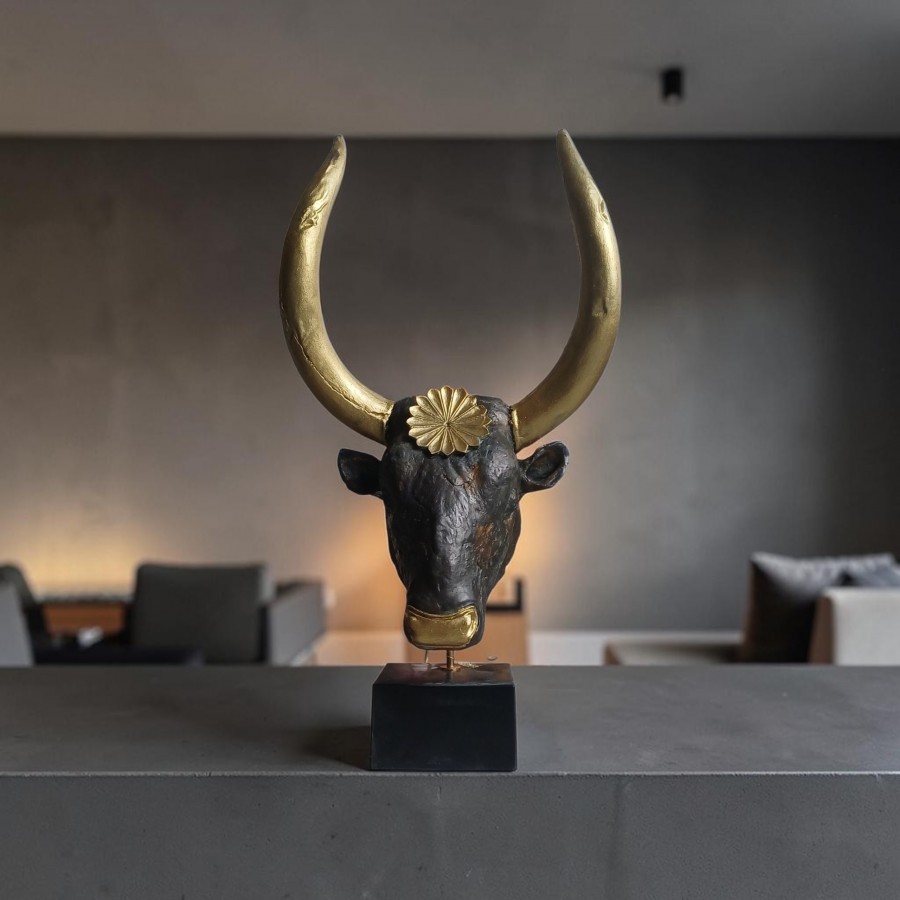
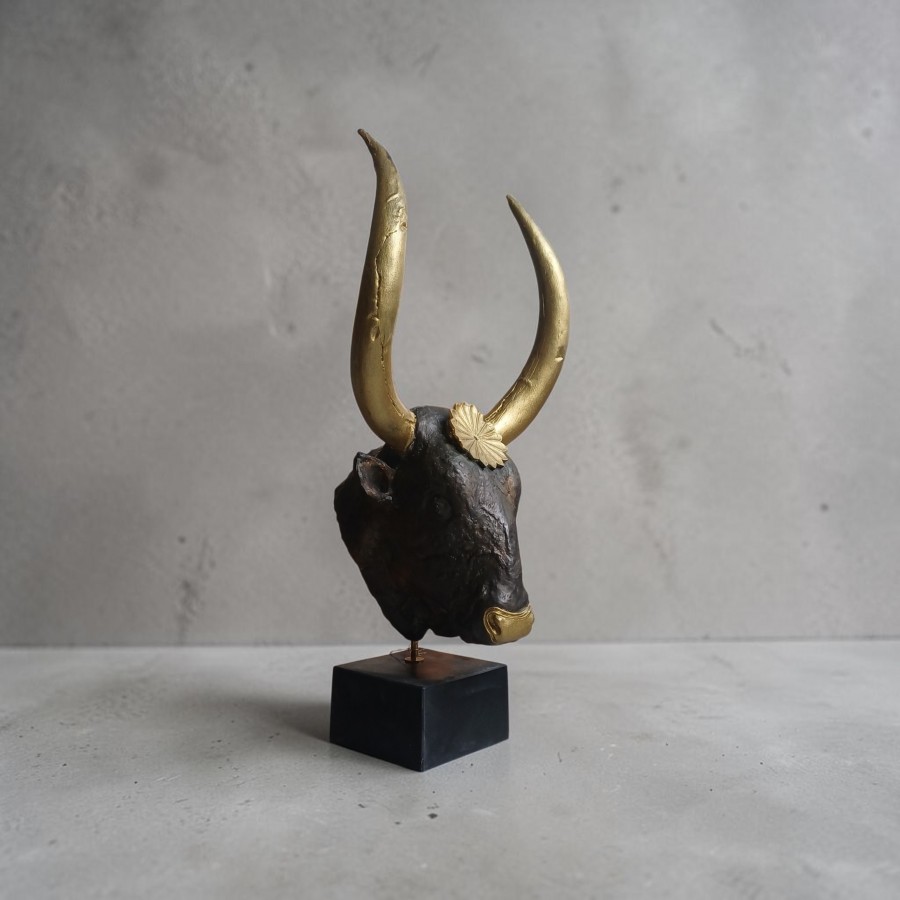
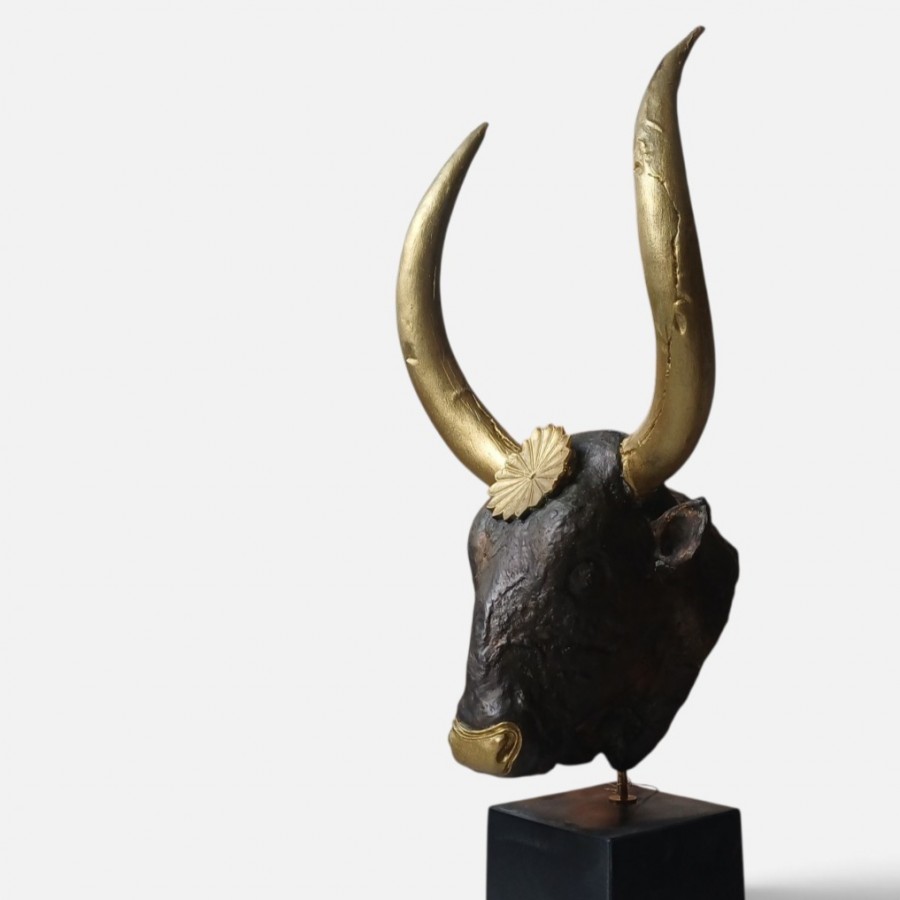
A handcrafted, museum-quality replica of the famous Mycenaean Bull's Head Rhyton, based on the masterwork of Aegean Bronze Age metallurgy (c. 1550–1500 BC).
Archaeological Lineage: Discovered by Heinrich Schliemann in Shaft Grave IV of Grave Circle A at Mycenae, the original silver and gold artifact remains one of the crown jewels of the National Archaeological Museum in Athens.
Emblem of Regal Power: The bull was the supreme symbol of strength, royal authority, and divine power in the Mycenaean world. Rhytons were sacred ritual vessels used for libations during ceremonial events.
Intricate Details: Featuring gilded sweeping horns, a gold-accented muzzle, and the iconic rosette star on the forehead—a traditional symbol of solar energy and rebirth.
Artisanal Finish & Stand: Individually hand-finished and patinated, mounted on a solid minimalist black base to elevate its sculptural presence.
Interior Styling: Standing at an impressive 38 cm (15 inches), this regal object serves as a commanding centerpiece for luxury interiors, executive offices, and private art collections.
Height: 38 cm (15 inches) including base
Material: Fine Ceramic Composite & Gilded Detailing
Original Location: Grave Circle A, Mycenae (16th Century BC)
Museum Location: National Archaeological Museum, Athens, Greece